
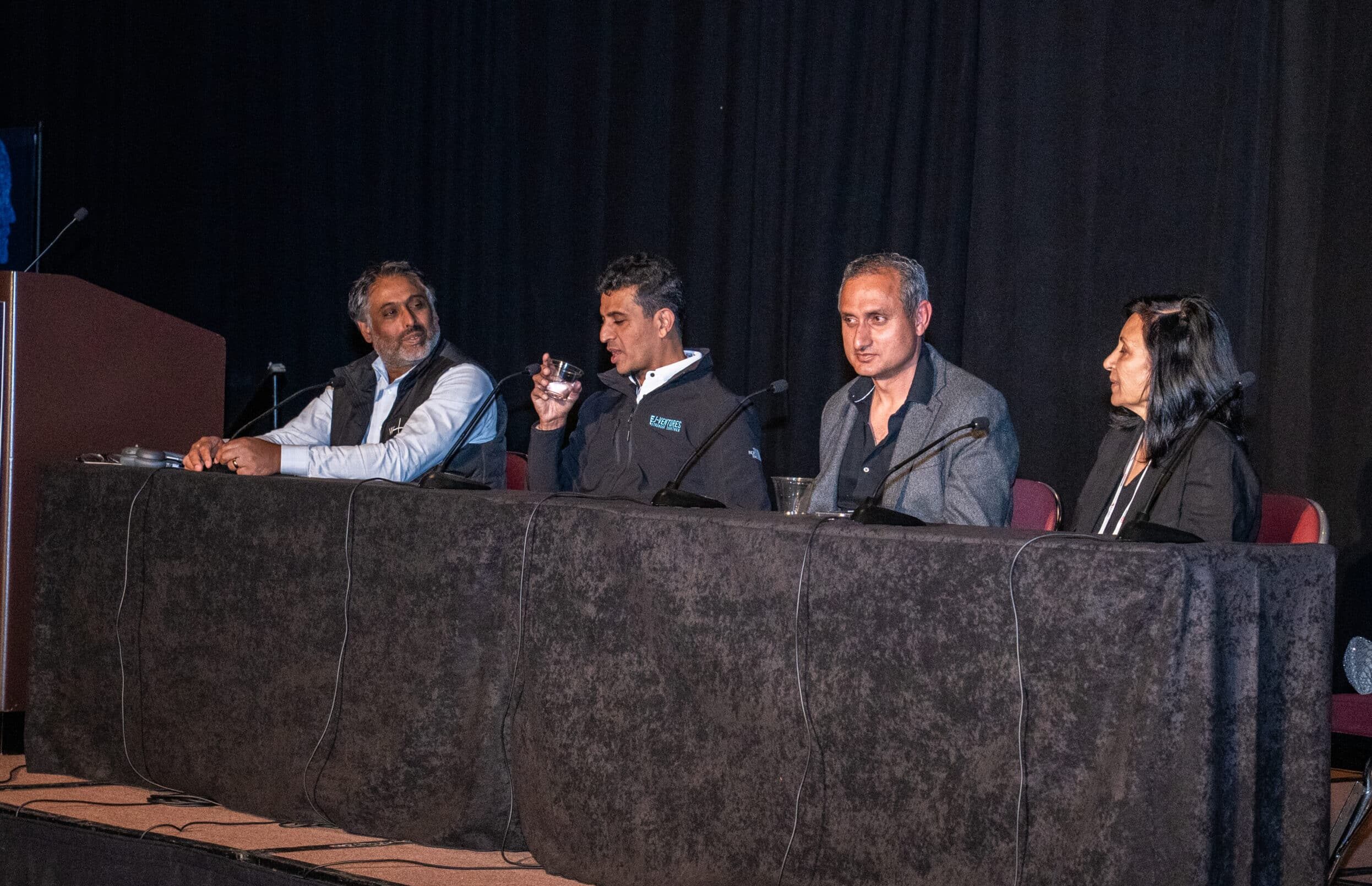
Building Bridges: The US-Israel-India Triad at TiECon 2025
At TiECon 2025, Asha Jadeja, founder of the Motwani Jadeja Foundation (MJF), moderated a compelling panel exploring the strategic triad between the US, Israel, and India. Supported by the Motwani Jadeja Foundation, the discussion highlighted how these nations are collaborating to drive innovation, foster entrepreneurship, and tackle global challenges. Through initiatives like DRISHTI and the Motwani Jadeja India-Israel Innovation Corridor, the foundation and its leadership are playing a pivotal role in bridging these ecosystems to create new opportunities for startups and investors.
The world is in the midst of a transformative phase, where geopolitical shifts, technological breakthroughs, and entrepreneurial drive are converging. The US, Israel, and India stand as cornerstones of this new frontier, not just as individual hubs of innovation, but as a powerful triad reshaping the future of technology, trade, and global partnerships.
The panelists included Asha Jadeja (Founder, Motwani Jadeja Foundation), Vikram J. Singh (Senior Vice President, WestExec Advisors), Manu Rekhi (Managing Director, SVQ), and Nilesh Trivedi (Principal Investor, J-Ventures Fund). This panel examined how the collective energy of these nations could forge a new path for global entrepreneurship and technological innovation.
Asha Jadeja, with her deep expertise and vision, set the tone for the discussion by emphasizing the shifting dynamics of global alliances. Speaking about the geopolitical tensions and the increasing complexity of international relations, she underscored the importance of proactive engagement in fostering cross-border collaboration between the US, India, and Israel. Her leadership in creating programs like DRISHTI, which bridges Israeli and Indian startup ecosystems, serves as a testament to her commitment to driving innovation through strategic partnerships. Under her guidance, the Motwani Jadeja Foundation has been actively supporting initiatives that encourage deeper ties between these dynamic regions.
Asha’s belief in the importance of global collaboration was clear when she shared how geopolitical changes create opportunities for entrepreneurs and investors to play a key role in reshaping the global landscape. She specifically highlighted the critical importance of entrepreneurs as the bedrock of these shifts. For her, it is not just about navigating the challenges of today, but about fostering environments where founders from different nations can come together, innovate, and thrive. “Each of us has a role to play in navigating the shifting global geopolitics,” Asha shared, emphasizing that it is through strategic partnerships, whether through mentoring, funding, or co-innovation, that new opportunities emerge. For Asha, these collaborative efforts are not just about capitalizing on the present; they are about building sustainable and impactful ventures that can withstand geopolitical uncertainties.
A prime example of this approach in action is the DRISHTI program, a collaboration between the Israeli Embassy in India and the Motwani Jadeja Foundation. This program has successfully brought together Israeli startups and Indian markets, helping Israeli companies find local partners and market access in India. The MJ India-Israel Innovation Corridor is another milestone that exemplifies this collaboration, facilitating the growth of startups working in cutting-edge areas like drones, AI, and data communications. Through these initiatives, the Motwani Jadeja Foundation plays a pivotal role in bridging the gap between the two countries, enabling startups to access new markets and partners, and helping create pathways for scaling up innovations.
Additionally, the Motwani Jadeja Centre of Excellence at T-Hub in Hyderabad, which was inaugurated as part of these initiatives, is a key physical and strategic hub fostering collaboration. This center supports startups from both Israel and India, providing them with a platform to connect with investors, mentors, and industry leaders, while focusing on dual-use technologies that have both civilian and defense applications. The center is part of a broader effort to make India a leading player in the global innovation ecosystem by fostering high-impact startups, and it underscores the impact of the Motwani Jadeja Foundation’s work.
Vikram J. Singh, Senior Vice President at WestExec Advisors, further echoed this theme of collaboration and innovation. He explained the vital role of initiatives like I2U2 (Israel, India, US, UAE) and IMEC (India-Middle East-Europe Economic Corridor), which seek to bolster economic, technological, and defense partnerships. Singh also emphasized the need for democratic nations to work together to secure a future where technological advancements are governed responsibly and where stable, peaceful environments are maintained.
Manu Rekhi, Managing Director of Silicon Valley Quad, reflected on the emerging opportunities in the US-India corridor. Rekhi discussed how India’s thriving software industry is shifting towards deep tech, AI, and defense-related ventures, and he stressed that this evolution opens up unprecedented opportunities for collaboration between the US, Israel, and India. Rekhi also pointed out that the key to fostering this growth lies in reducing regulatory barriers and allowing entrepreneurs to thrive in a free-market environment.


Nilesh Trivedi, Principal Investor at J-Ventures Fund, brought an investment-focused perspective to the discussion. He shared insights into how venture capital is shaping the innovation landscape, especially with Israeli startups that operate at the intersection of defense and technology. Trivedi highlighted the resilience of Israeli founders and their ability to continue innovating even in challenging geopolitical environments. For Trivedi, the strength of the Israel-US-India partnership lies in its shared focus on innovation and its ability to foster growth in critical sectors, including AI, drones, and autonomous systems.
The conversation also touched upon the challenges faced by Israeli startups entering the Indian market. One key challenge is the lack of local knowledge or partners, which can make it difficult for foreign companies to gain a foothold in a new market. Asha Jadeja’s Drishti program addresses this challenge by helping Israeli startups establish local connections and navigate the complexities of the Indian market. This initiative ensures that startups can overcome cultural, logistical, and regulatory barriers that might otherwise impede their success.
Furthermore, cultural differences, regulatory hurdles, and logistical challenges are being tackled head-on through these trilateral initiatives. By focusing on mentorship, cross-border partnerships, and collaborative platforms like the Motwani Jadeja Centre of Excellence, these efforts are helping entrepreneurs break through barriers that have traditionally slowed down international collaborations. Both the Indian and Israeli markets offer distinct advantages – India’s large consumer base and technological talent, and Israel’s prowess in defense technologies and cybersecurity – making them ideal partners for mutual growth and innovation.
Asha Jadeja’s insights on fostering collaboration resonated throughout the panel. She stressed the importance of bringing together entrepreneurs, investors, and government-backed initiatives to shape a future where technology thrives across borders. Her vision for a more connected world, where the US, Israel, and India can work together to unlock new opportunities, was central to the discussion.
As the discussion turned to defense technologies, particularly the growing intersection between civilian and military applications, panelists noted the significant rise in dual-use technologies, such as drones and AI-powered systems. With nations like the US, Israel, and India exploring new collaborations in defense tech, there is a clear recognition that innovation in this space can be leveraged for broader societal benefits. Rekhi and Trivedi both highlighted how collaborations in defense technology can lead to advancements in areas like infrastructure protection, environmental monitoring, and data security – benefiting not just the defense sector but also private industries.
Vikram J. Singh introduced the idea of “Indus X,” a platform aimed at bringing the US and India together to focus on joint challenges in defense technology. With this initiative, the US, Israel, and India have an opportunity to create groundbreaking solutions in unmanned systems, AI, and cybersecurity, while also addressing broader needs in environmental resilience and critical infrastructure protection.
Despite the growing complexities of the geopolitical environment, panelists remained optimistic about the potential for the US, Israel, and India to work together in shaping the future of global innovation. Asha Jadeja’s leadership and vision were clear in this discussion, as she continues to drive efforts at the Motwani Jadeja Foundation to ensure that entrepreneurs across these nations have the opportunity to collaborate, innovate, and succeed.
As the session concluded, attendees were left with a strong understanding of the pivotal role these three nations will play in driving global technological advancements. The partnership between the US, Israel, and India is more than just an alliance of convenience – it is a powerful, forward-thinking coalition poised to shape the future of technology and entrepreneurship on the global stage.
Watch the panel:

